
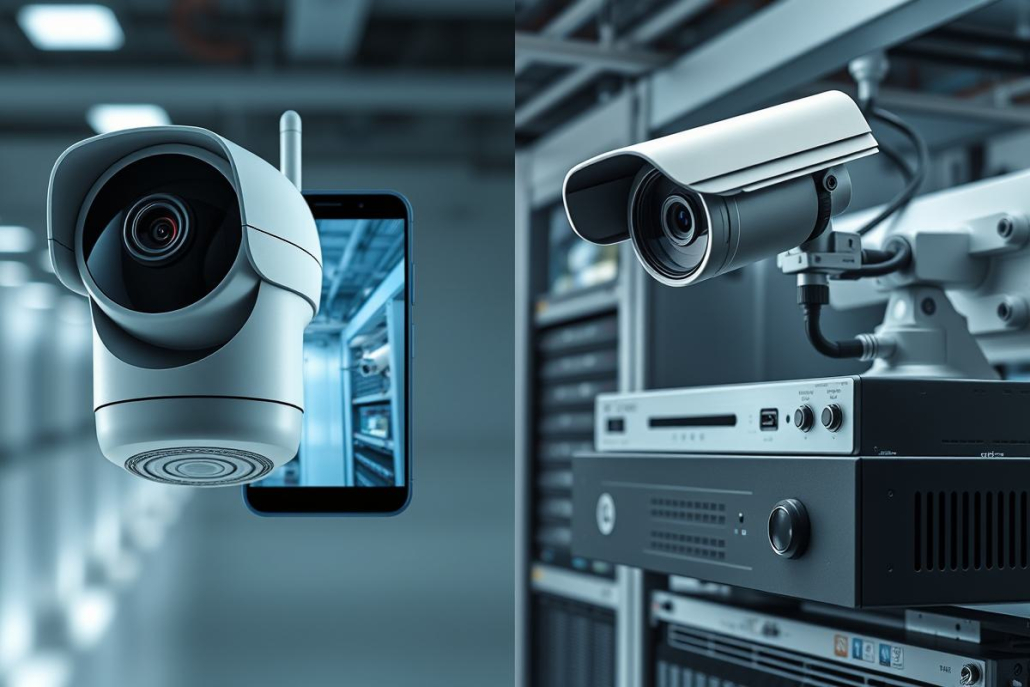
Smart Security Cameras vs. Traditional Systems in Toronto: A PowerSol Guide
In the bustling urban landscape of the Greater Toronto Area (GTA), securing your property, whether it’s a residential home in Mississauga or a commercial establishment in Vaughan, is paramount. With advancements in technology, property owners are faced with an increasingly complex choice: should you invest in cutting-edge Smart Security Cameras or opt for the time-tested reliability of traditional security systems? At PowerSol.ca, your trusted GTA low voltage provider, we understand this dilemma. We specialize in tailoring robust security solutions across Toronto, Brampton, Markham, Richmond Hill, Oakville, Milton, and beyond. This comprehensive guide will break down the features, advantages, and disadvantages of both options, helping you make an informed decision for your specific security needs.
Both smart and traditional security systems aim to protect your assets, deter intruders, and provide peace of mind. However, they achieve these goals through vastly different approaches. Understanding these differences is the first step towards creating an impregnable perimeter around your property.
Understanding Traditional Security Systems
Traditional security systems have been the backbone of property protection for decades. Often referred to as CCTV (Closed-Circuit Television) systems, they typically involve a network of wired cameras connected to a central recording device, such as a Digital Video Recorder (DVR) or Network Video Recorder (NVR), and monitors.
Components and Functionality
A typical traditional system comprises several key components:
- Cameras: These are usually analog (for DVRs) or older IP cameras (for NVRs), connected via coaxial or Ethernet cables. They capture video footage.
- Recording Device (DVR/NVR): The DVR (Digital Video Recorder) converts analog signals from cameras into digital format and stores them on a hard drive. NVRs (Network Video Recorders) are used with IP cameras and record digital video streams directly.
- Monitors: Dedicated screens are used for live viewing and playback of recorded footage.
- Cabling: Extensive wiring is often required to connect each camera to the recording device and power source. This critical infrastructure is where expert network cabling services from PowerSol.ca become invaluable.
- Alarm Panels: Integrated with sensors (door/window contacts, motion detectors) to trigger an audible alarm if a breach occurs.
The functionality is straightforward: cameras continuously record footage, which is stored locally. In case of an incident, users can review the footage to identify perpetrators or understand events.
Advantages of Traditional Systems
Despite the rise of newer technologies, traditional systems offer several compelling benefits:
- Reliability and Stability: Since most components are hardwired, traditional systems are less susceptible to Wi-Fi interference, signal drops, or internet outages. This makes them highly reliable for continuous surveillance.
- Local Storage: Footage is stored on a local hard drive, eliminating the need for recurring cloud storage subscription fees and providing greater control over your data.
- No Internet Dependence for Core Function: While some modern traditional systems offer remote viewing, their primary recording function doesn’t rely on an active internet connection, making them robust even in connectivity-challenged environments.
- High Data Security: With local storage and a closed-circuit setup, traditional systems can be less vulnerable to remote hacking attempts compared to cloud-dependent solutions.
Disadvantages of Traditional Systems
However, traditional systems also come with their limitations:
- Complex Installation: The wiring requirements for traditional systems can be extensive and costly, often requiring professional installation by experienced technicians like those at PowerSol.ca. This can be particularly disruptive for existing structures.
- Limited Remote Access: While some DVR/NVRs offer remote viewing via apps, the functionality is often less seamless and responsive compared to smart systems.
- Scalability Issues: Adding new cameras or relocating existing ones can be challenging due to the fixed wiring infrastructure.
- Higher Upfront Costs: The cost of hardware and installation can be significant, although recurring costs are typically lower.
- Lack of Advanced Features: They generally lack features like AI-powered analytics, two-way audio, and seamless smart home integration.
Exploring Smart Security Cameras
Smart Security Cameras represent the forefront of modern surveillance technology, leveraging internet connectivity, artificial intelligence (AI), and integration capabilities to offer a more dynamic and interactive security experience. These cameras are increasingly popular in homes and businesses across the GTA, from the bustling streets of Toronto to the quiet neighbourhoods of Oakville.
Key Features and Technologies
Smart security cameras are defined by their advanced features:
- IP-Based Connectivity: These cameras connect to your network via Wi-Fi or Ethernet, allowing for flexible placement and access from anywhere.
- Cloud Storage & AI Analytics: Footage is often stored in the cloud, and AI algorithms can distinguish between people, pets, and vehicles, reducing false alarms.
- Remote Access & Mobile Apps: Users can view live feeds, access recorded footage, and manage settings directly from their smartphones or tablets, offering unparalleled convenience.
- Two-Way Audio: Many smart cameras include microphones and speakers, enabling two-way communication with visitors or potential intruders.
- Smart Home Integration: They can integrate seamlessly with other smart devices, such as smart locks, lighting, and thermostats, creating a cohesive automated security ecosystem. Learn more about comprehensive smart solutions on our Smart Home Solutions page.
Advantages of Smart Cameras
The benefits of opting for Smart Security Cameras are numerous:
- Enhanced Accessibility: Monitor your property from anywhere in the world, receiving instant alerts and accessing live footage on demand.
- Intelligent Alerts: AI-powered motion detection can differentiate between significant events and minor disturbances, minimizing irrelevant notifications.
- Easy Installation & Scalability: Many smart cameras are designed for DIY installation, and adding or moving cameras is often as simple as connecting them to your Wi-Fi network.
- Integration with Smart Ecosystems: Create a truly automated and responsive security system that works in harmony with other smart devices in your home or business.
- Regular Software Updates: Smart cameras often receive over-the-air updates, adding new features and improving security over time.
Disadvantages of Smart Cameras
Despite their appeal, Smart Security Cameras have their drawbacks:
- Internet Dependence: A stable and fast internet connection is crucial for their functionality. Any disruption can compromise surveillance.
- Privacy Concerns: Cloud storage raises questions about data security and privacy, although reputable providers employ strong encryption.
- Subscription Fees: Many advanced features, such as extended cloud storage or AI analytics, often require monthly or annual subscription fees.
- Potential for Latency: Live feeds might experience slight delays depending on internet speed and server load.
- Power Requirements: While some are battery-powered, others require constant power, which might still necessitate some wiring.
Direct Comparison: Smart vs. Traditional
To help you weigh your options, let’s look at a side-by-side comparison of Smart Security Cameras and traditional systems across key aspects:
| Feature | Smart Security Cameras | Traditional Security Systems |
|---|---|---|
| Connectivity | Wi-Fi/Ethernet, often wireless | Wired (Coaxial/Ethernet) to DVR/NVR |
| Installation | Easier, often DIY, flexible placement | Complex, professional wiring required |
| Monitoring | Remote via app, instant alerts, AI analytics | Local monitor, limited remote access (if any) |
| Storage | Cloud (subscription-based), some local | Local (hard drive in DVR/NVR), no subscriptions |
| Cost | Lower upfront, higher recurring (subscriptions) | Higher upfront, lower recurring |
| Integration | Seamless with smart home devices | Minimal to no smart home integration |
| Scalability | Highly flexible, easy to add/move cameras | Limited, challenging to expand/reconfigure |
| Internet Reliance | High dependence for full functionality | Low dependence for core recording |
| Advanced Features | AI detection, two-way audio, facial recognition | Basic recording and motion detection |
Which System is Right for Your GTA Property?
Choosing between Smart Security Cameras and traditional systems ultimately depends on your specific priorities, property type, and budget. There’s no one-size-fits-all answer, but here are some considerations:
- For the Tech-Savvy Homeowner: If you value convenience, remote access, smart home integration, and don’t mind potential subscription fees, smart cameras are an excellent choice. They are perfect for modern homes in areas like Richmond Hill or Oakville looking for an integrated lifestyle.
- For Businesses Requiring Robust, Local Surveillance: Larger commercial properties, warehouses, or facilities in Brampton or Milton that require continuous, independent recording with maximum data control might lean towards traditional systems. The robust, hardwired nature provides unparalleled reliability.
- For Properties with Unstable Internet: If your location in the GTA experiences frequent internet outages or has slow connectivity, a traditional system’s local recording capability offers a more stable security solution.
- Budget Considerations: Factor in both upfront installation costs and ongoing subscription fees. While smart cameras might seem cheaper initially, recurring cloud costs can add up. Conversely, traditional systems have higher installation costs but minimal ongoing expenses.
- Privacy Concerns: If data privacy is a top concern, a locally stored traditional system might be preferable. However, reputable smart camera brands offer strong encryption and privacy protocols.
It’s also worth noting that hybrid systems exist, combining the reliability of wired cameras with smart features, offering a balance between the two. For comprehensive insights into camera technology, you can refer to authoritative sources like Wikipedia’s page on Closed-circuit television (CCTV).
PowerSol: Your Trusted Partner for Security Solutions in the GTA
Regardless of whether you choose Smart Security Cameras, a traditional system, or a hybrid approach, professional installation and ongoing support are crucial. PowerSol.ca is a leading low voltage service provider in the Greater Toronto Area, offering expert solutions for security systems, network cabling, audio-visual systems, and smart home solutions. Our team of certified technicians serves all major cities, including Toronto, Mississauga, Brampton, Vaughan, Markham, Richmond Hill, Oakville, and Milton.
We provide comprehensive services from initial consultation and system design to professional installation and ongoing maintenance & support. Our goal is to ensure your security system is robust, reliable, and perfectly tailored to your unique requirements. Explore more of our insights and tips on our blog.
Investing in a security system is investing in peace of mind. Let PowerSol.ca guide you through the complexities of modern security technology. Contact us today for a personalized consultation and discover how we can help protect what matters most to you.
Frequently Asked Questions (FAQ)
Q1: Are smart security cameras truly as secure as traditional wired systems?
A1: While traditional wired systems often have a perceived advantage in physical security due to their hardwired connections and local storage, modern Smart Security Cameras from reputable brands employ strong encryption for data transmission and storage, often utilizing cloud servers with robust cybersecurity measures. The main vulnerability for smart cameras typically lies with internet connectivity and user-side security practices (e.g., strong passwords). For maximum security, PowerSol.ca recommends a professional setup of either system.
Q2: Can I integrate a traditional security system with my smart home devices?
A2: Generally, traditional security systems have limited to no direct integration capabilities with smart home ecosystems. Their primary function is surveillance and local recording. However, some newer traditional DVR/NVR units might offer basic remote viewing apps, which isn’t true smart home integration. For seamless automation and control with other smart devices, Smart Security Cameras are specifically designed for this purpose, linking with smart lighting, locks, and voice assistants.
Q3: What are the main ongoing costs for each type of system?
A3: For traditional security systems, ongoing costs are typically minimal after the initial installation and hardware purchase. You might incur costs for professional monitoring services if opted for, or occasional maintenance. For Smart Security Cameras, while initial hardware costs can be lower, most advanced features like extended cloud storage, AI-powered analytics, and professional monitoring usually come with monthly or annual subscription fees. PowerSol.ca can help you calculate the total cost of ownership for both options.


Leave a Reply
Want to join the discussion?Feel free to contribute!