

Reliable Power: Traditional vs. New UPS Models for GTA Systems
In today’s interconnected world, an uninterrupted power supply is no longer a luxury but a fundamental necessity, especially for critical low voltage systems. For businesses and homeowners across the Greater Toronto Area (GTA), ensuring the continuous operation of security systems, network infrastructure, and smart home solutions is paramount. This is where Uninterruptible Power Supply (UPS) systems play a vital role. At PowerSol, we understand the intricacies of maintaining robust low voltage environments, and a key component of that resilience is reliable power backup. This article offers a comprehensive comparison of traditional UPS with new models, helping you understand the evolution of power protection and how these advancements benefit your systems in Toronto, Mississauga, Brampton, and beyond.
The Critical Role of Uninterrupted Power in the GTA
From bustling Toronto downtown offices to sprawling residential complexes in Vaughan and Markham, the demand for seamless operation of low voltage systems is constant. A sudden power outage, voltage fluctuation, or surge can cripple essential services, leading to data loss, security breaches, and operational downtime. Imagine a security camera system going offline during a critical moment, or a smart home automation hub failing, leaving you without control. For PowerSol, a leading provider of security systems, network cabling, and smart home solutions in the GTA, ensuring power stability is an integral part of our service promise. UPS systems act as a critical bridge, providing temporary power during outages and conditioning power to protect sensitive electronics from voltage irregularities.
Understanding Traditional UPS Systems
Traditional UPS systems have served as the backbone of power protection for decades. These models typically fall into two main categories: Standby (Offline) and Line-Interactive. They are designed to provide basic protection against power failures and common voltage fluctuations.
Standby (Offline) UPS
- How they work: In normal operation, the connected equipment runs directly off utility power. When a power outage or significant voltage drop occurs, the UPS switches to battery power via an inverter.
- Pros: Cost-effective, compact, and energy-efficient during normal operation as the inverter is only active when needed. Ideal for non-critical home office equipment or simple workstations.
- Cons: Has a brief transfer time (typically 2-10 milliseconds) when switching to battery power, which can be problematic for highly sensitive equipment. Offers minimal power conditioning.
Line-Interactive UPS
- How they work: Similar to standby, but with the added feature of an autotransformer that regulates voltage fluctuations (brownouts and overvoltages) without switching to battery. The inverter is always connected to the output, allowing for faster transfer times.
- Pros: Better protection than standby UPS, with faster transfer times and voltage regulation capabilities. A good balance between cost and performance for small to medium businesses.
- Cons: Still has a transfer time, albeit shorter than standby models. Does not provide continuous, regenerated power, meaning minor power anomalies can still affect sensitive equipment.
The Evolution: Exploring New UPS Models
Modern power demands, especially for sophisticated low voltage systems like those PowerSol installs in Oakville and Milton, necessitate more advanced protection. New UPS models, predominantly Online (Double-Conversion) systems, offer superior performance, efficiency, and reliability.
Online (Double-Conversion) UPS
- How they work: The most advanced type of UPS. Connected equipment always runs off the UPS’s inverter, which continuously converts incoming AC power to DC to charge the batteries, and then back to AC power for the output. This creates an “electrical firewall” between the utility power and the sensitive load.
- Pros: Provides perfect, regenerated power with zero transfer time during outages. Offers continuous, comprehensive protection against all nine common power problems (outages, sags, surges, undervoltage, overvoltage, line noise, frequency variation, switching transients, harmonic distortion). Essential for mission-critical applications like data centers, medical equipment, and high-end network infrastructure.
- Cons: Generally more expensive and can be less energy-efficient than other types due to continuous power conversion (though modern models are significantly more efficient).
Key Innovations in Modern UPS Technology
Beyond the fundamental online topology, new UPS models incorporate several groundbreaking innovations:
- Modular Designs: Allows for easy scalability and maintenance. Users can add or replace power modules as their needs grow, improving flexibility and reducing downtime.
- Lithium-ion Batteries: A significant shift from traditional Valve Regulated Lead Acid (VRLA) batteries. Lithium-ion offers longer lifespan, faster charging, smaller footprint, lighter weight, and better performance at higher temperatures.
- Higher Efficiency Modes: Many modern online UPS systems feature eco-modes or high-efficiency modes that can bypass the double-conversion process when power quality is stable, significantly reducing energy consumption.
- Advanced Monitoring & Management: Remote monitoring via network cards (SNMP), cloud-based management platforms, and predictive analytics allow for proactive maintenance and real-time status updates, crucial for complex systems in Richmond Hill and other GTA areas.
- Smaller Footprint & Higher Power Density: Modern designs pack more power into smaller units, saving valuable floor space in server rooms or dedicated utility closets.
Comparison of Traditional UPS with New Models: A Detailed Look
When considering power protection for your low voltage systems, a detailed comparison of traditional UPS with new models reveals clear advantages for modern solutions, especially in demanding environments. PowerSol helps clients throughout the GTA make informed decisions based on their specific needs.
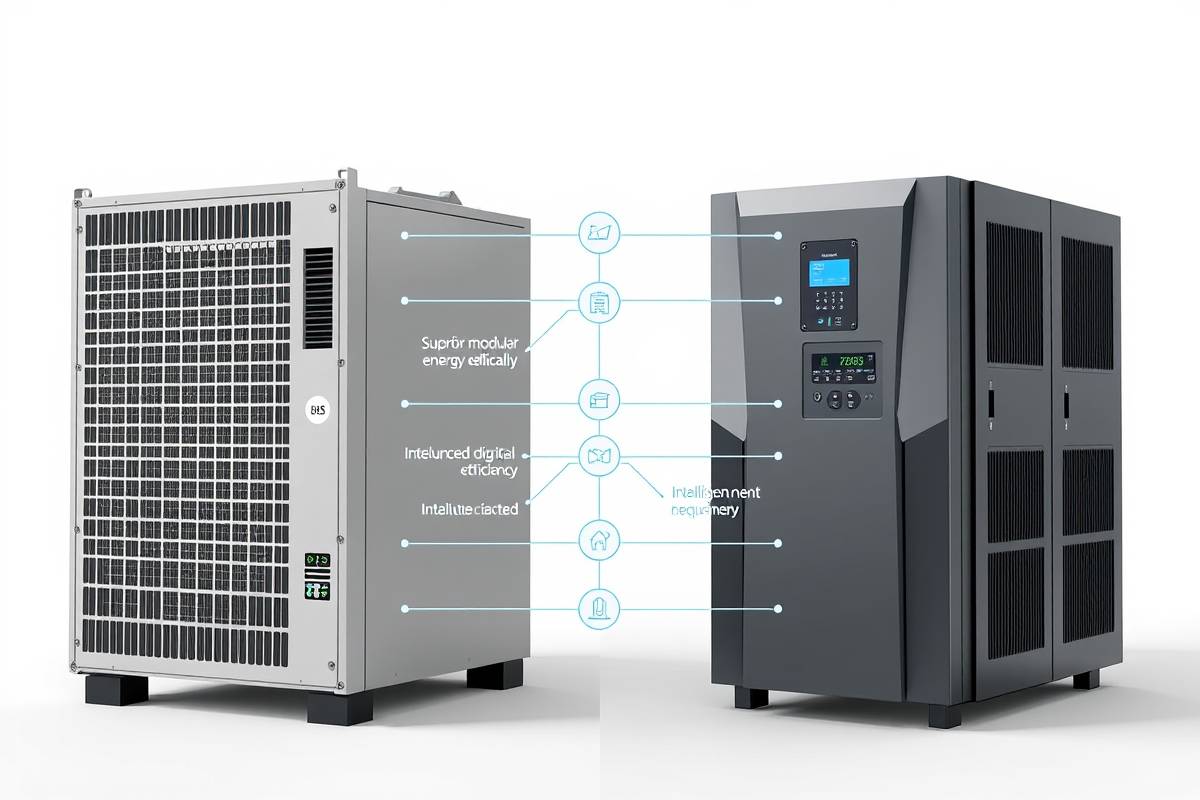
Key Differentiating Factors:
- Power Quality and Protection:
- Traditional: Primarily addresses outages and some voltage fluctuations (Line-Interactive). Limited protection against noise, surges, and harmonic distortion.
- New Models (Online): Provides pristine, conditioned power, safeguarding against all common power problems with zero transfer time. Ideal for sensitive electronics like network servers, high-definition CCTV, and smart home controllers.
- Efficiency and Energy Consumption:
- Traditional: Standby models are efficient when utility power is stable. Line-interactive has moderate efficiency.
- New Models: Historically less efficient due to double conversion. However, modern online UPS systems now boast high-efficiency modes (up to 99%) and advanced designs that significantly reduce energy waste, leading to lower operating costs in the long run.
- Battery Technology and Lifespan:
- Traditional: Almost exclusively uses VRLA batteries, which typically last 3-5 years and are sensitive to temperature.
- New Models: Increasingly utilizing Lithium-ion batteries, offering 8-10+ years lifespan, faster recharge times, and better performance in varying environmental conditions. This reduces maintenance and replacement costs.
- Scalability and Flexibility:
- Traditional: Generally fixed capacity, requiring a complete replacement if power needs grow significantly.
- New Models: Modular designs allow for adding power and battery modules as requirements evolve, making them a future-proof investment for growing businesses in Brampton and beyond.
- Monitoring and Management:
- Traditional: Basic local indicators.
- New Models: Advanced network connectivity, remote monitoring, and integration with building management systems. This proactive approach to maintenance minimizes downtime and ensures optimal performance.
- Total Cost of Ownership (TCO):
- Traditional: Lower upfront cost but potentially higher TCO due to shorter battery life, less efficiency, and potential damage to sensitive equipment from inadequate power conditioning.
- New Models: Higher upfront investment, but lower TCO over time due to longer battery life, higher energy efficiency, reduced maintenance, and superior protection that prevents costly equipment damage and downtime. For more on TCO, you can refer to general business resources like Investopedia on Total Cost of Ownership.
Choosing the Right UPS for Your GTA Business or Home
Selecting the appropriate UPS system depends on several factors, including the criticality of the equipment, budget, required runtime, and future expansion plans. PowerSol’s expertise in low voltage solutions across the GTA means we can guide you through this decision-making process.
Consider the following:
- Type of Equipment: Is it a simple workstation (Standby UPS) or a critical server, security hub, or smart home controller (Online UPS)?
- Power Sensitivity: How tolerant is your equipment to minor power fluctuations or transfer times?
- Budget: Balance initial cost with long-term benefits like efficiency and protection.
- Runtime Requirements: How long do you need power during an outage? This determines battery capacity.
- Scalability: Do you anticipate your power needs growing in the future?
- Environment: Consider temperature and space constraints.
Whether you’re safeguarding a comprehensive access control system in Mississauga, ensuring seamless audio-visual experiences in a Toronto conference room, or securing a smart home solution in Oakville, PowerSol can recommend and integrate the ideal UPS to complement your low voltage infrastructure.
PowerSol: Your Partner for Robust Low Voltage and Power Solutions in the GTA
At PowerSol, we pride ourselves on being the trusted low voltage provider in the Greater Toronto Area. Our comprehensive services, from security systems and network cabling to AV installations and smart home automation, all rely on a foundation of stable, reliable power. While we don’t just sell UPS units, we understand their critical importance and help our clients integrate the right power protection solutions to ensure their systems perform optimally.
Our service areas include Toronto, Mississauga, Brampton, Vaughan, Markham, Richmond Hill, Oakville, and Milton. We are committed to delivering cutting-edge solutions backed by expert maintenance and support. Choosing PowerSol means partnering with a team that understands both the technology and the local needs of the GTA.
Conclusion: Securing Your Future with Advanced Power Solutions
The journey from traditional UPS systems to the advanced, intelligent models of today reflects the increasing demand for unwavering power stability. A thorough comparison of traditional UPS with new models highlights the superior protection, efficiency, and flexibility offered by modern online systems, making them indispensable for critical low voltage infrastructure. By investing in the right power protection, you’re not just buying a battery backup; you’re securing the reliability, longevity, and performance of your entire system. Contact PowerSol today to discuss how we can help safeguard your valuable low voltage investments in the GTA.
Frequently Asked Questions (FAQ)
Q1: Why is an uninterruptible power supply (UPS) important for my low voltage systems?
A1: A UPS is crucial for low voltage systems (like security cameras, network servers, or smart home hubs) because it provides immediate backup power during outages, preventing data loss, system reboots, and operational downtime. It also protects sensitive electronics from power fluctuations like surges, sags, and noise, extending the lifespan and ensuring the stable performance of your equipment.
Q2: What is the main difference between traditional and new UPS models?
A2: The main difference lies in their operational topology and features. Traditional models (Standby, Line-Interactive) offer basic protection with a brief transfer time when switching to battery power. New models, primarily Online (Double-Conversion) UPS, provide continuous, conditioned power with zero transfer time, offering superior protection against all power problems. Modern UPS also feature advancements like modular design, Lithium-ion batteries, and advanced remote monitoring.
Q3: How can PowerSol help me choose the right UPS for my business or home in the GTA?
A3: PowerSol, as a low voltage systems expert in the GTA, can assess your specific needs, including the criticality of your equipment, power load requirements, desired runtime, and budget. We then recommend and integrate the most suitable UPS solution that aligns with your security systems, network infrastructure, AV setups, or smart home solutions, ensuring seamless and reliable operation across Toronto, Mississauga, Brampton, and surrounding areas.


Leave a Reply
Want to join the discussion?Feel free to contribute!