
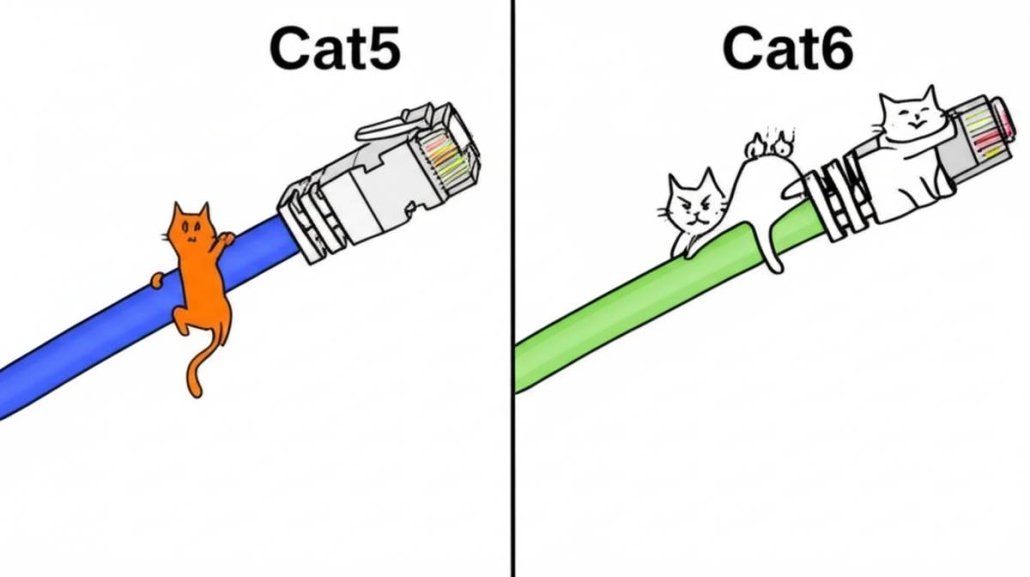
Choosing the right network cable can feel like navigating a tech labyrinth! Especially when comparing Cat5 vs. Cat6. At PowerSol, serving the Greater Toronto Area (GTA) with top-notch network cabling solutions, we often get asked about the differences between these two popular options. This guide will break down everything you need to know to make an informed decision for your home or business network.
Understanding Network Cable Categories
Before diving into the specifics of Cat5 vs. Cat6, let’s quickly recap what these categories mean. “Cat” stands for “Category,” and the number indicates the specification version of the twisted pair cable. Each newer category offers improved performance in terms of bandwidth and data transfer speeds.
Cat5: The Reliable Standard
Cat5 cable has been a workhorse in networking for many years. While newer standards have emerged, it’s still found in many existing installations. There are actually two main types of Cat5:
- Cat5: Supports speeds up to 100 Mbps (Megabits per second) and a bandwidth of 100 MHz.
- Cat5e (Enhanced): This is the more common version. It’s designed to reduce crosstalk (interference between wires inside the cable) and supports Gigabit Ethernet (1000 Mbps) speeds under ideal conditions and shorter distances.
When to Consider Cat5e
Cat5e can still be a viable option in specific scenarios:
- Existing Infrastructure: If your building is already wired with Cat5e, it may suffice for basic internet usage and less demanding applications.
- Budget Constraints: Cat5e cable and hardware are generally cheaper than Cat6.
- Short Distances: For short cable runs, Cat5e can handle Gigabit Ethernet effectively.
Cat6: The Modern Contender
Cat6 cable represents a significant upgrade over Cat5e. It’s designed to handle higher bandwidth and faster data transfer rates. Here’s what sets it apart:
- Higher Bandwidth: Cat6 supports a bandwidth of up to 250 MHz, providing more headroom for demanding applications.
- Faster Speeds: It can support Gigabit Ethernet (1000 Mbps) over longer distances than Cat5e. Some Cat6 variants even support 10 Gigabit Ethernet (10 Gbps) for shorter runs.
- Reduced Crosstalk: Cat6 cables are built with tighter twists and better shielding to minimize interference, ensuring more reliable data transmission.
There’s also an enhanced version called Cat6a (Augmented). Cat6a offers even better performance with a bandwidth of 500 MHz and the ability to support 10 Gigabit Ethernet over longer distances.
When to Choose Cat6
Cat6 is the preferred choice for most new installations and upgrades, offering several advantages:
- Future-Proofing: Cat6 provides more bandwidth capacity, ensuring your network can handle future applications and increased data demands.
- High-Speed Applications: If you require fast data transfer rates for gaming, video streaming, or large file transfers, Cat6 is the better option.
- Business Networks: Cat6 is ideal for business environments where network performance and reliability are crucial.
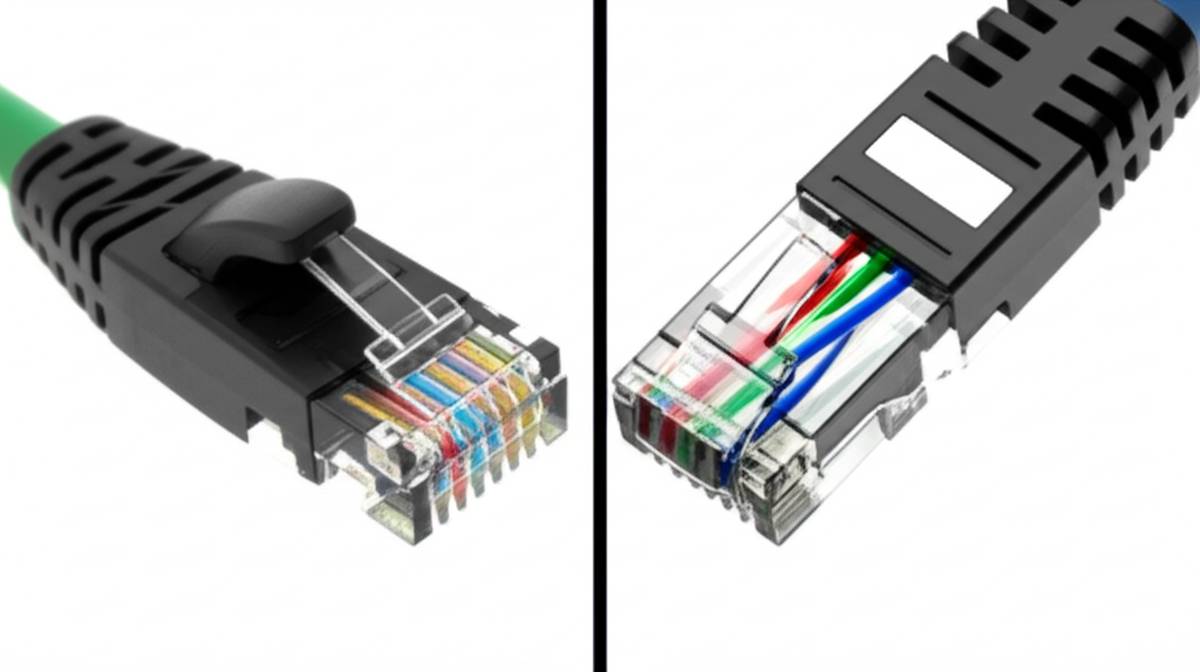
Key Differences: Cat5 vs. Cat6
Let’s summarize the key distinctions between Cat5 vs. Cat6 in a table:
| Feature | Cat5e | Cat6 |
|---|---|---|
| Bandwidth | 100 MHz | 250 MHz |
| Maximum Speed | 1 Gbps (short distances) | 1 Gbps (longer distances), 10 Gbps (short distances) |
| Crosstalk | More susceptible | Less susceptible |
| Cost | Lower | Higher |
| Applications | Basic internet, older installations | Modern networks, high-speed applications |
Cost Considerations
The price difference between Cat5e and Cat6 can be significant. Cat6 cable and associated hardware (connectors, patch panels) are typically more expensive. However, the long-term benefits of improved performance and future-proofing often outweigh the initial cost, especially for businesses.
When budgeting for network cabling, consider not only the cost of the cable itself but also the labor costs for installation. PowerSol provides professional network cabling services in Toronto, Mississauga, Brampton, Vaughan, Markham, Richmond Hill, Oakville, and Milton, ensuring your installation is done correctly and efficiently. Visit PowerSol’s network cabling page to learn more about their offerings.
Making the Right Choice for Your Needs
So, which cable should you choose? Here’s a simplified guide:
- Home Users (Basic Internet): If you only need basic internet access and are on a tight budget, Cat5e might suffice.
- Home Users (Gaming, Streaming): For a smoother experience with gaming and video streaming, Cat6 is recommended.
- Businesses: Cat6 is almost always the best choice for businesses due to its superior performance and future-proofing capabilities.
Ultimately, the best choice depends on your specific needs and budget. Consider your current and future bandwidth requirements, the distance of your cable runs, and the importance of network reliability.
Professional Network Cabling Services in the GTA
PowerSol is a trusted provider of low voltage services, including network cabling, throughout the Greater Toronto Area. We offer expert consultation, professional installation, and ongoing support to ensure your network performs optimally. Whether you need Cat5 vs. Cat6 installed or have other low voltage requirements, PowerSol has you covered. We proudly serve Toronto, Mississauga, Brampton, Vaughan, Markham, Richmond Hill, Oakville, and Milton. Learn more about our services.
We offer solutions for structured cabling in Toronto and beyond. Explore our structured cabling solutions.
Conclusion: Choosing the Right Cable – Cat5 vs. Cat6
The decision between Cat5 vs. Cat6 hinges on your specific needs and budget. While Cat5e can suffice for basic applications, Cat6 offers superior performance and future-proofing, making it the preferred choice for modern networks. Consider your bandwidth requirements, distance, and budget to make the right choice. For professional installation and expert advice in the GTA, contact PowerSol. Visit Investopedia to learn more about Cat5e cables.
FAQ: Common Questions About Network Cabling
1. What is the maximum length for a Cat6 cable run?
The maximum recommended length for a Cat6 cable run is 100 meters (328 feet) when used for Gigabit Ethernet. For 10 Gigabit Ethernet, the maximum length is reduced to 55 meters (180 feet) in some environments.
2. Can I use Cat6 cable with older devices that only support Cat5e?
Yes, Cat6 cable is backward compatible with Cat5e. Your older devices will still work, but they will only operate at the speeds supported by the Cat5e standard.
3. Is shielded cable necessary for home use?
Shielded cable (STP) is generally not necessary for home use unless you live in an environment with high levels of electromagnetic interference (EMI). Unshielded cable (UTP) is typically sufficient for most residential applications. Businesses, particularly those in industrial settings, might benefit from shielded cables.


Leave a Reply
Want to join the discussion?Feel free to contribute!